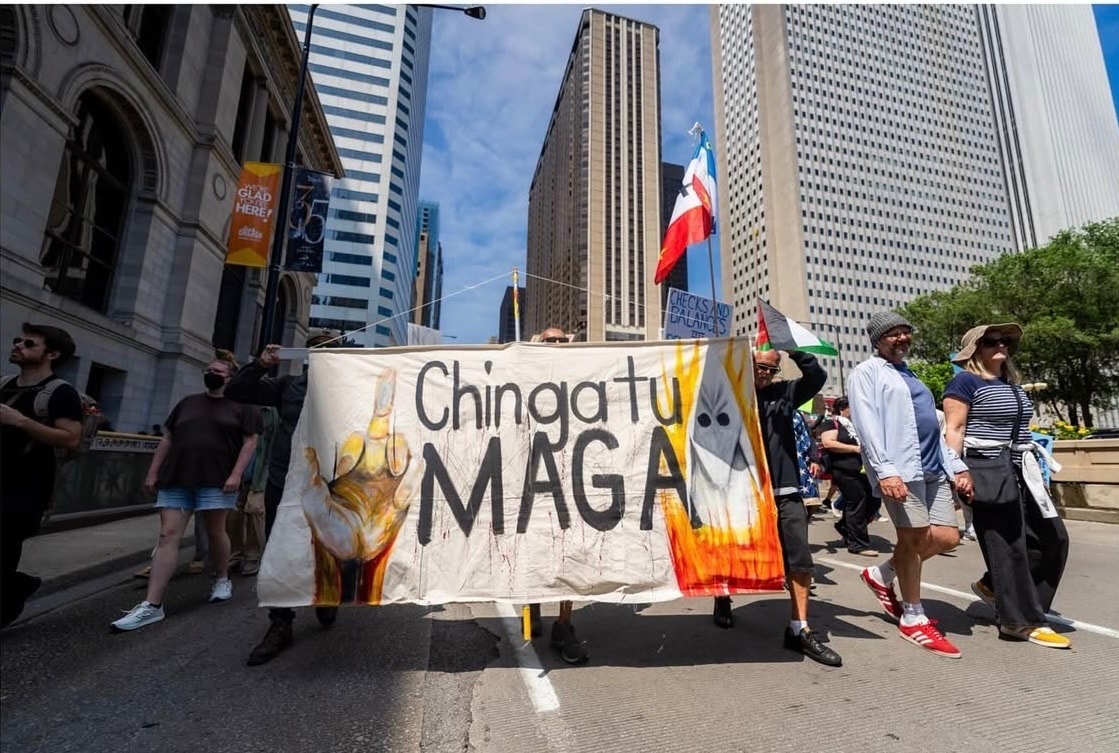
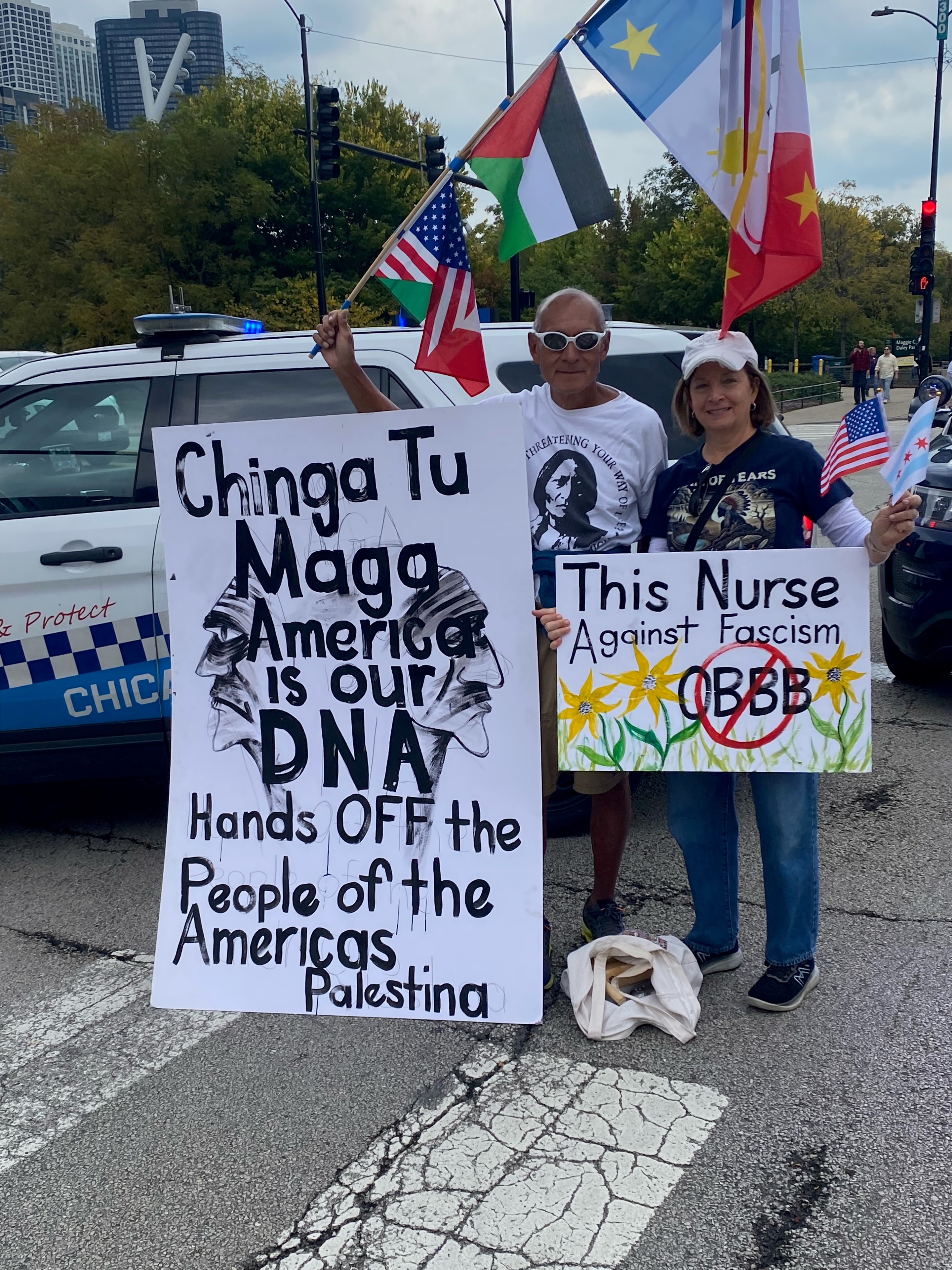
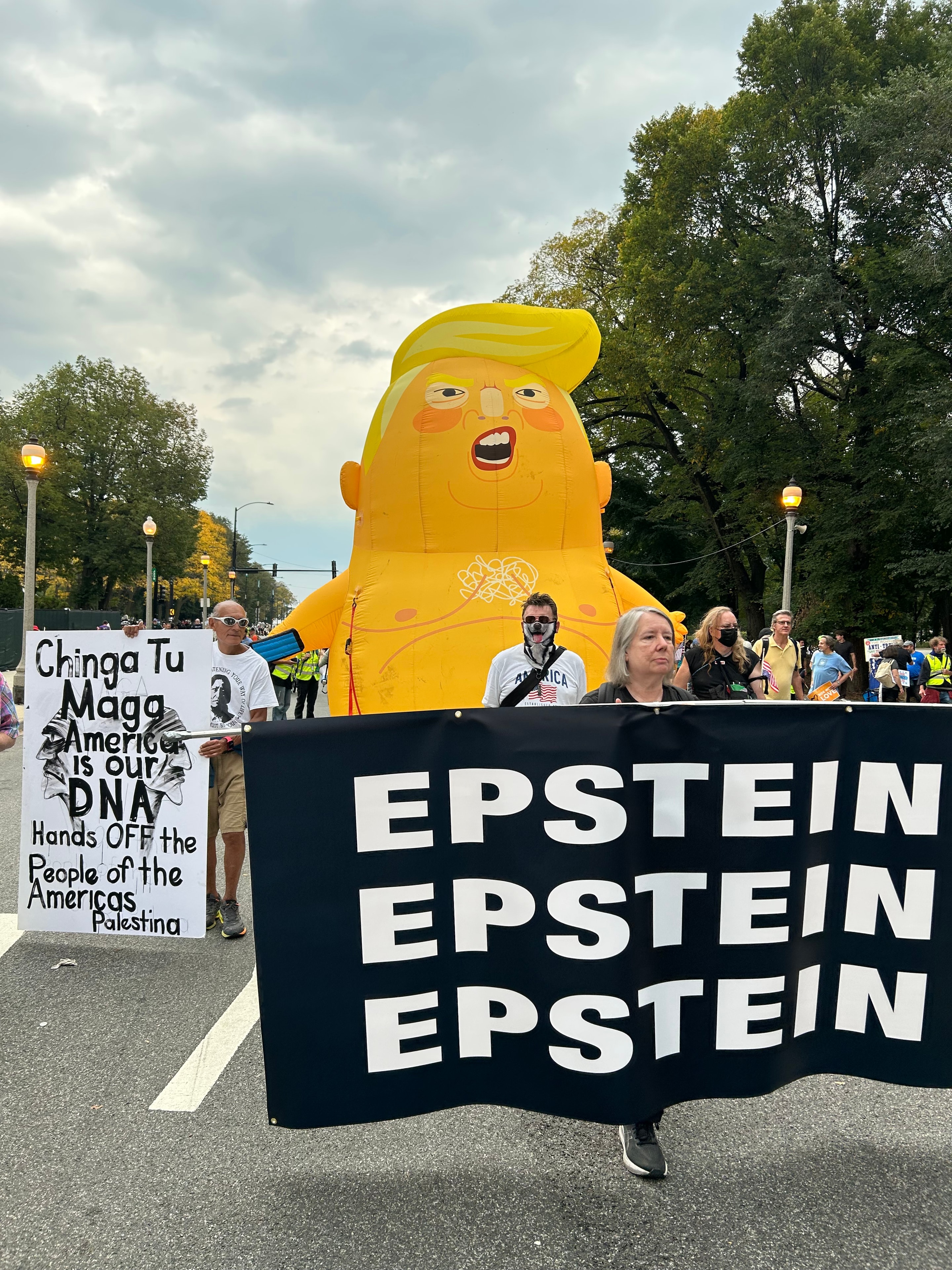
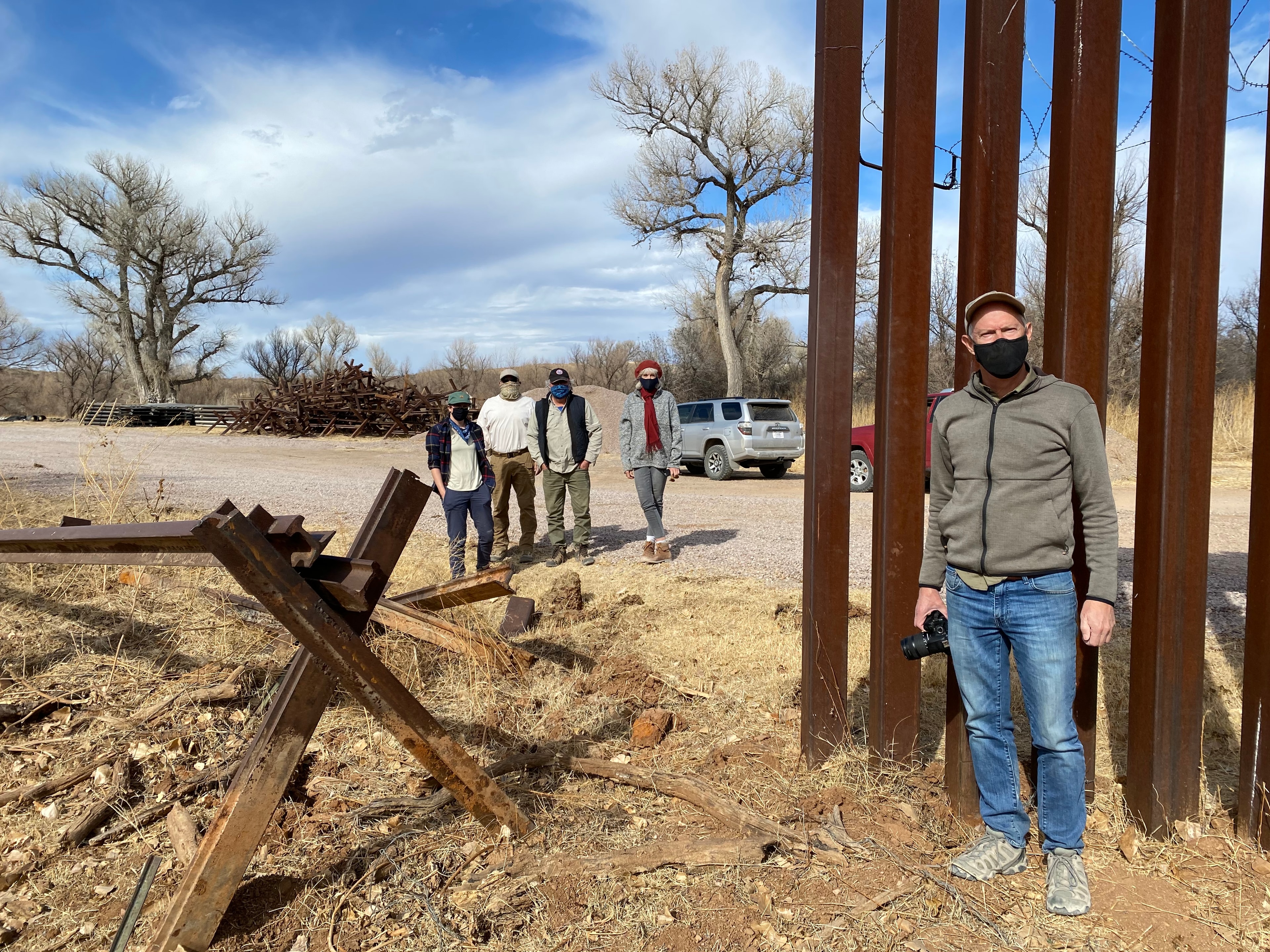
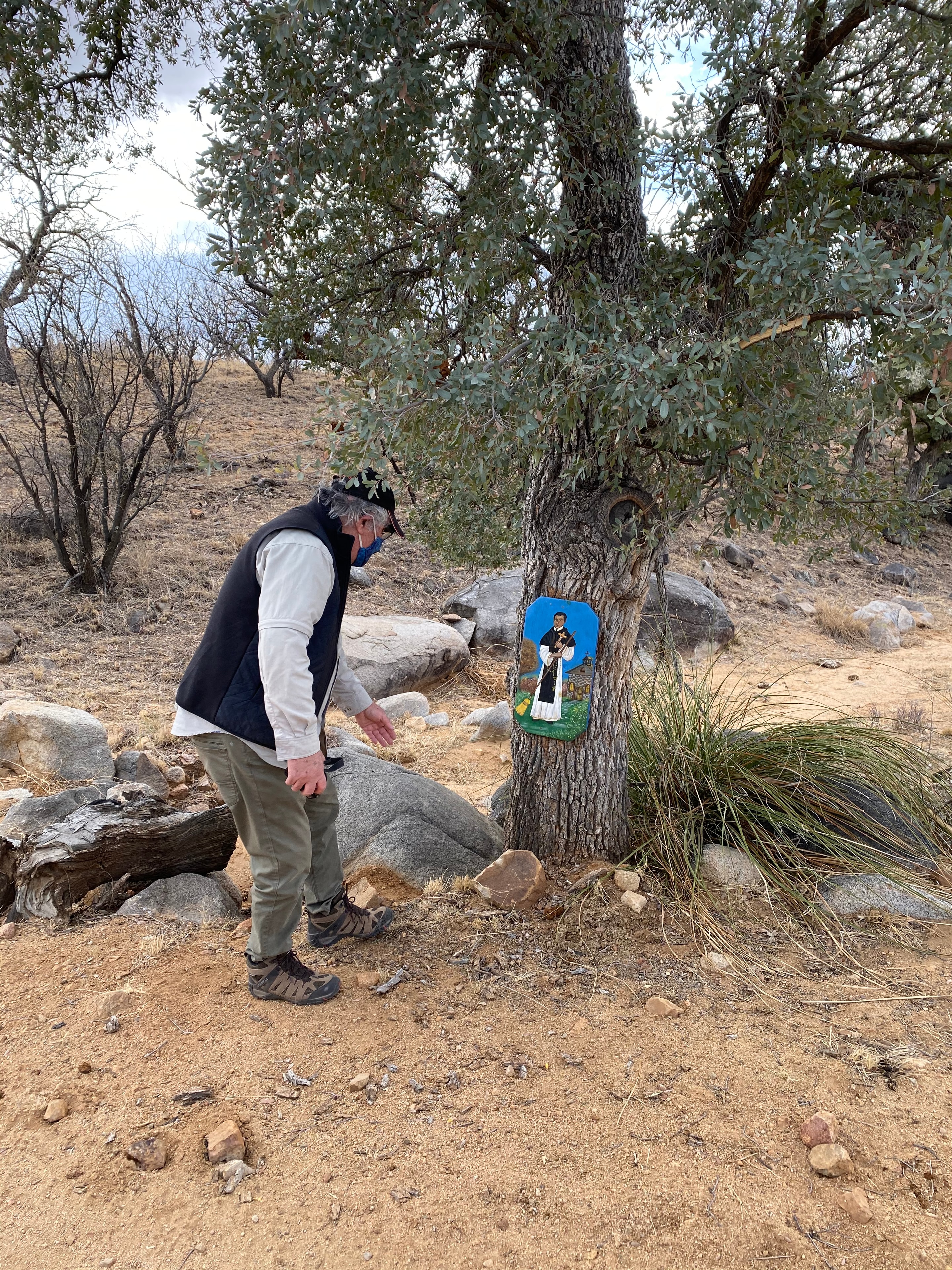
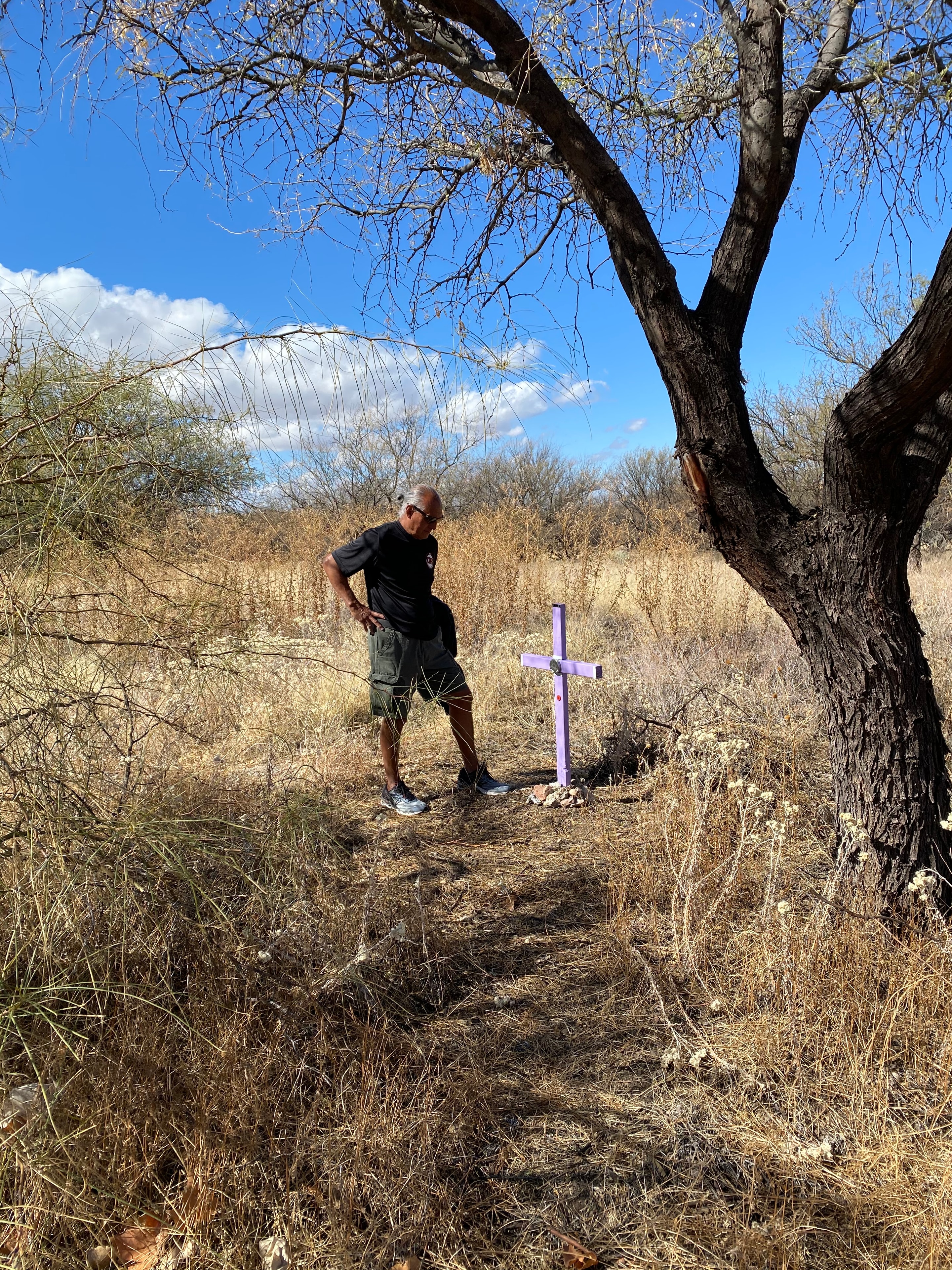
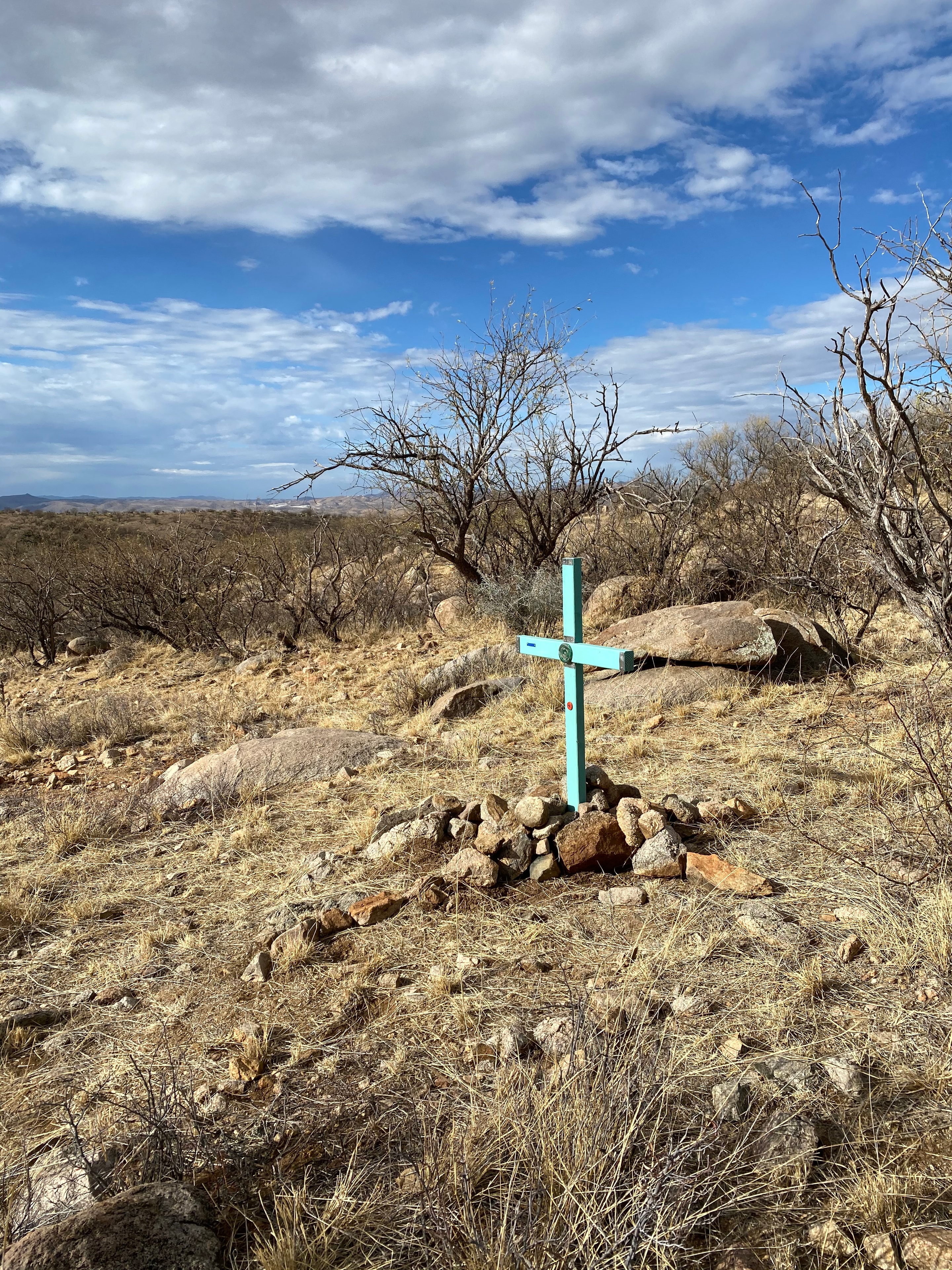
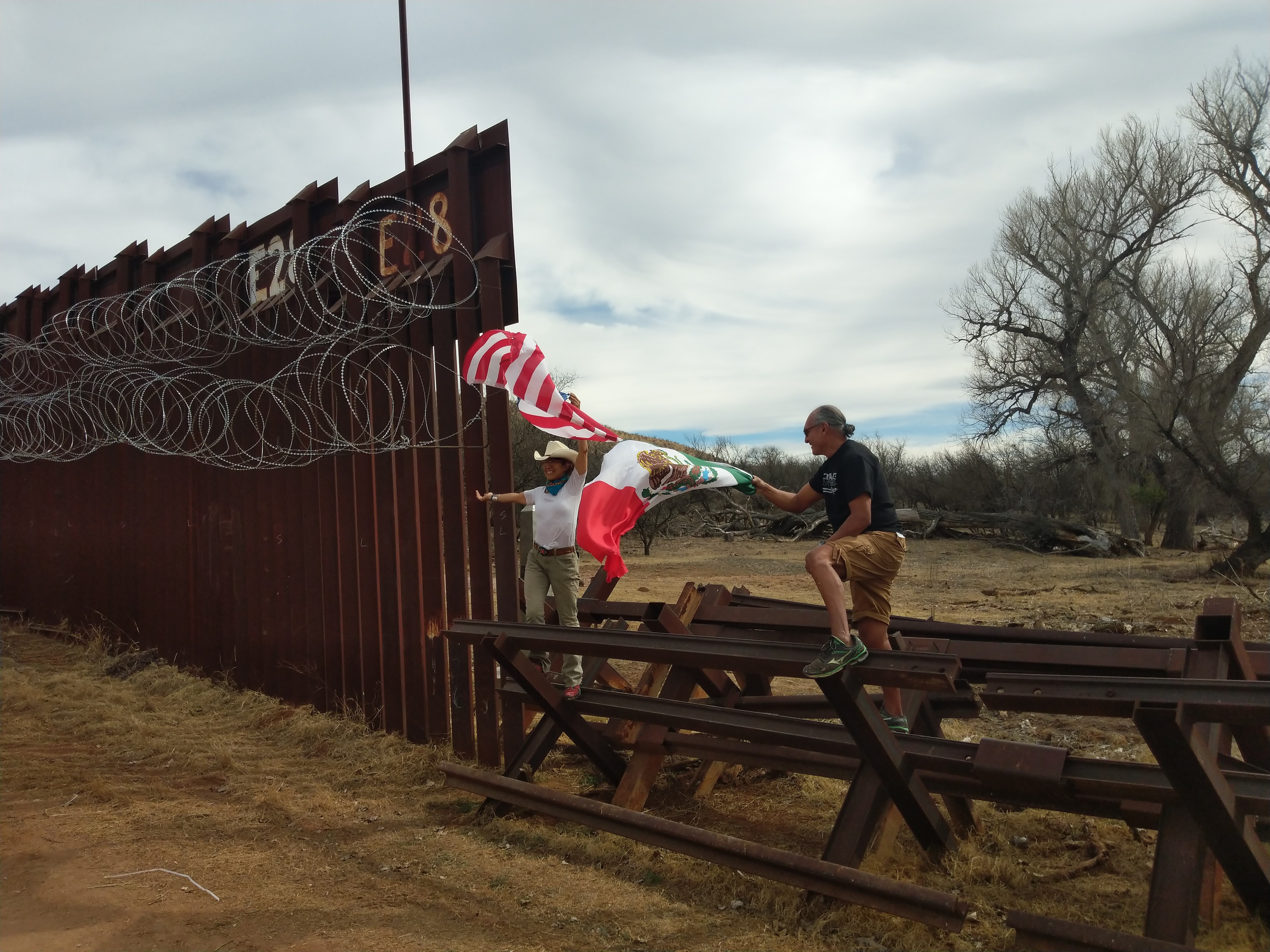
Chinga tu MAGA — Ricardo Santos Hernández, Chicago, September 2025. A large-scale hand-painted banner carried triumphantly through the streets of downtown Chicago during the No Kings March against the Trump regime. Flames rise beneath bold lettering; a raised fist and a hooded Klan figure flank the words — naming the violence plainly. Retired teacher Mike McDermott and renowned artist Salvador Jiménez Flores marched alongside Ricardo and this banner in solidarity with the millions who took to the streets across the United States on this day. Art as defiance. Art as presence. Art in the streets. — Ricardo Santos HernándezThis Nurse Against Fascism — Ricardo Santos Hernández, Chicago, Spring 2026. A photograph from the No Kings March through the streets of downtown Chicago. Ricardo stands alongside a nurse holding her hand-painted sign — "This Nurse Against Fascism" — adorned with sunflowers and a crossed-out OBBB. Ricardo holds his banner: "Chinga Tu MAGA / América is our DNA / Hands OFF the People of the Américas / Palestina." Flags of many nations — Palestinian, Mexican, American, and others — rise behind them. A living document of solidarity: nurses, artists, and people of the Americas marching together against fascism in the streets of Chicago. — Ricardo Santos HernándezEpstein — Ricardo Santos Hernández, Chicago, September 2025. A documentary photograph from the No Kings March through the streets of downtown Chicago. Ricardo, a woman carrying a bold black-and-white EPSTEIN banner, and a group of Chicago lawyers pulling a giant inflatable Trump balloon walk hand in hand through the streets — Ricardo's sign reading "Chinga Tu MAGA / América is our DNA / Hands OFF the People of the Américas / Palestina" visible in the foreground. Artists, lawyers, and citizens united in the streets, demanding accountability. Art as witness. Art as demand. — Ricardo Santos HernándezThe Cross Man at the Santa Cruz River — Alvaro Enciso, known as the Cross Man, and his team at the Santa Cruz River's point of entry into Arizona along the US-Mexico border. Using an advanced navigational system, Alvaro guides his team to the exact locations where migrants have perished in the desert, placing hand-crafted wooden crosses to honor each life lost. The rusted steel bollards and tank trap barriers of the border wall frame the landscape behind them — a monument to policy set against a monument to humanity. Ricardo Santos Hernández has collaborated with Alvaro on this project and has included his artwork in exhibitions curated in southern Arizona. — Ricardo Santos HernándezSan Martín in the Patagonia Mountains — Alvaro Enciso pauses before a retablo of San Martín de Porres placed by an anonymous hand on a live oak tree along a trail in the foothills of the Patagonia Mountains in southern Arizona, near the US-Mexico border. The hand-painted folk devotional — a quiet act of faith left in the desert — speaks to the same humanity that drives Alvaro's cross-placing work: the belief that every life that has passed through this landscape deserves to be seen and honored. — Ricardo Santos HernándezKino Springs — Ricardo Santos Hernández stands beside a hand-crafted lavender cross placed by Alvaro Enciso's team of Samaritans in the desert scrub of Kino Springs, southern Arizona — the exact location, near Ricardo's home, where a migrant perished. A mesquite tree arches overhead, the dry grass and open sky bearing witness. Each cross is placed with precision, guided by navigational data that leads the team to the spot where a human being took their last breath. A small, handmade marker in an immense and indifferent landscape. Art as witness. Humanity as resistance. — Ricardo Santos HernándezPatagonia Mountains — A solitary turquoise cross stands in the rocky hillside of the Sonoran desert in the foothills of the Patagonia Mountains, near the US-Mexico border. Placed by Alvaro Enciso's team of Samaritans and Ricardo Santos Hernández to honor a migrant who perished at this exact location. The vast desert sky opens behind it — bare mesquite, dry grass, ancient stone — the immensity of the landscape making the small handmade cross all the more profound. One life. One marker. The desert as witness. — Ricardo Santos HernándezSanta Cruz River — Raechel Running, photographer and activist, and Ricardo Santos Hernández stand on the tank trap barriers at the Santa Cruz River's point of entry into Arizona, the American and Mexican flags flying together in the wind against the rusted steel bollards and coils of razor wire. Two people. Two flags. One border. A defiant act of solidarity at the exact place where two nations — and two peoples who were never meant to be separated — meet. Photography by Raechel Running. — Ricardo Santos Hernández